Imported Cat Food in Pakistan: Dry vs Wet Food for Your Cat
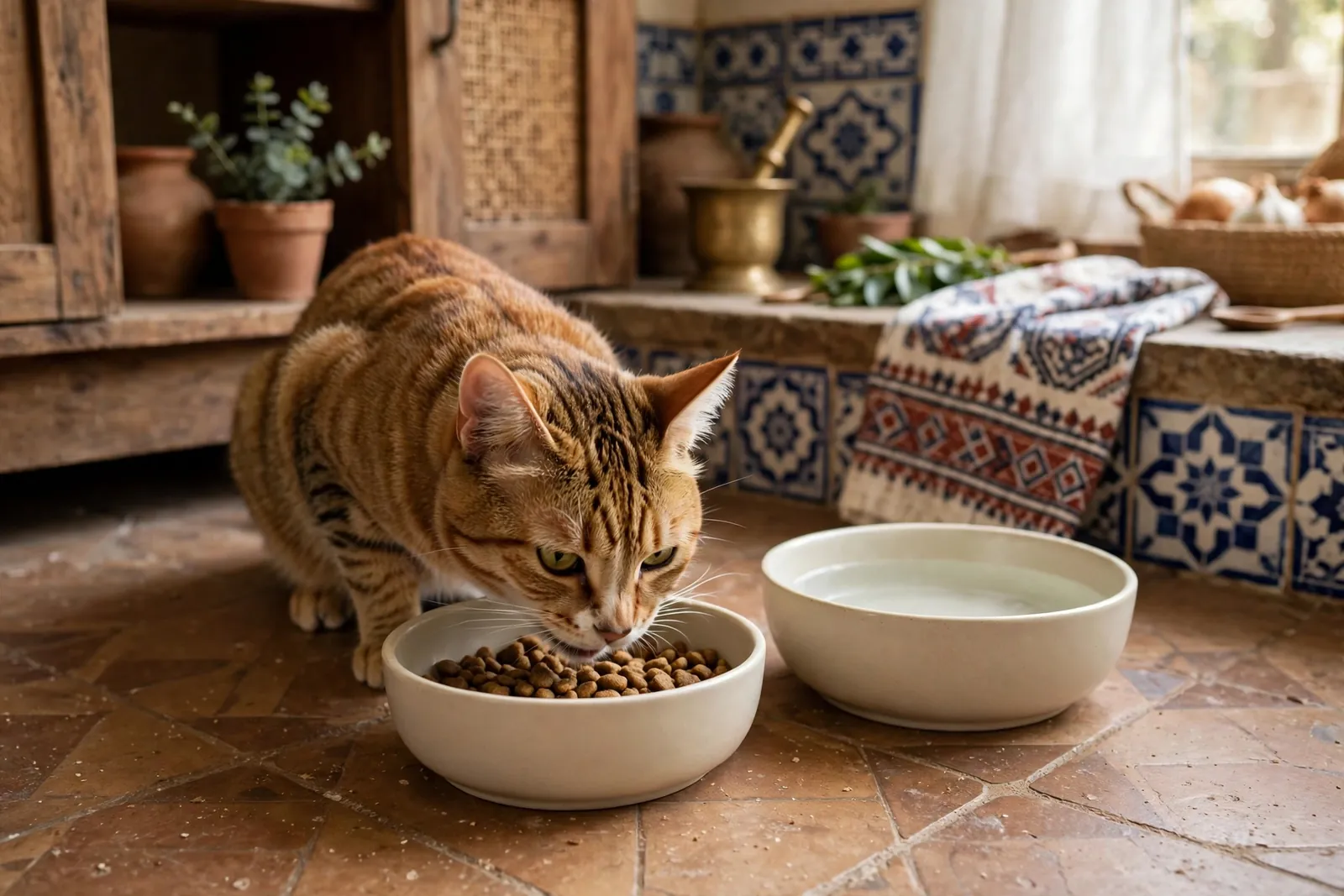
Every cat owner in Pakistan reaches the same fork in the road sooner or later: the bag of dry kibble, or the pouch of wet food. Both formats can feed a cat well. The real question is which one, or which mix, suits your cat, your routine, and your budget.
In this guide:
- What Dry Food Actually Does for Your Cat
- What Wet Food Actually Does for Your Cat
- Nutrition Compared Side by Side
- Palatability: What Picky Cats Really Do
- Value Compared Without the Guesswork
- Feeding in Pakistani Summers
- Kittens, Seniors, and Special Cases
- A Mixed Routine That Works
- Storage and Freshness in Our Climate
What Dry Food Actually Does for Your Cat
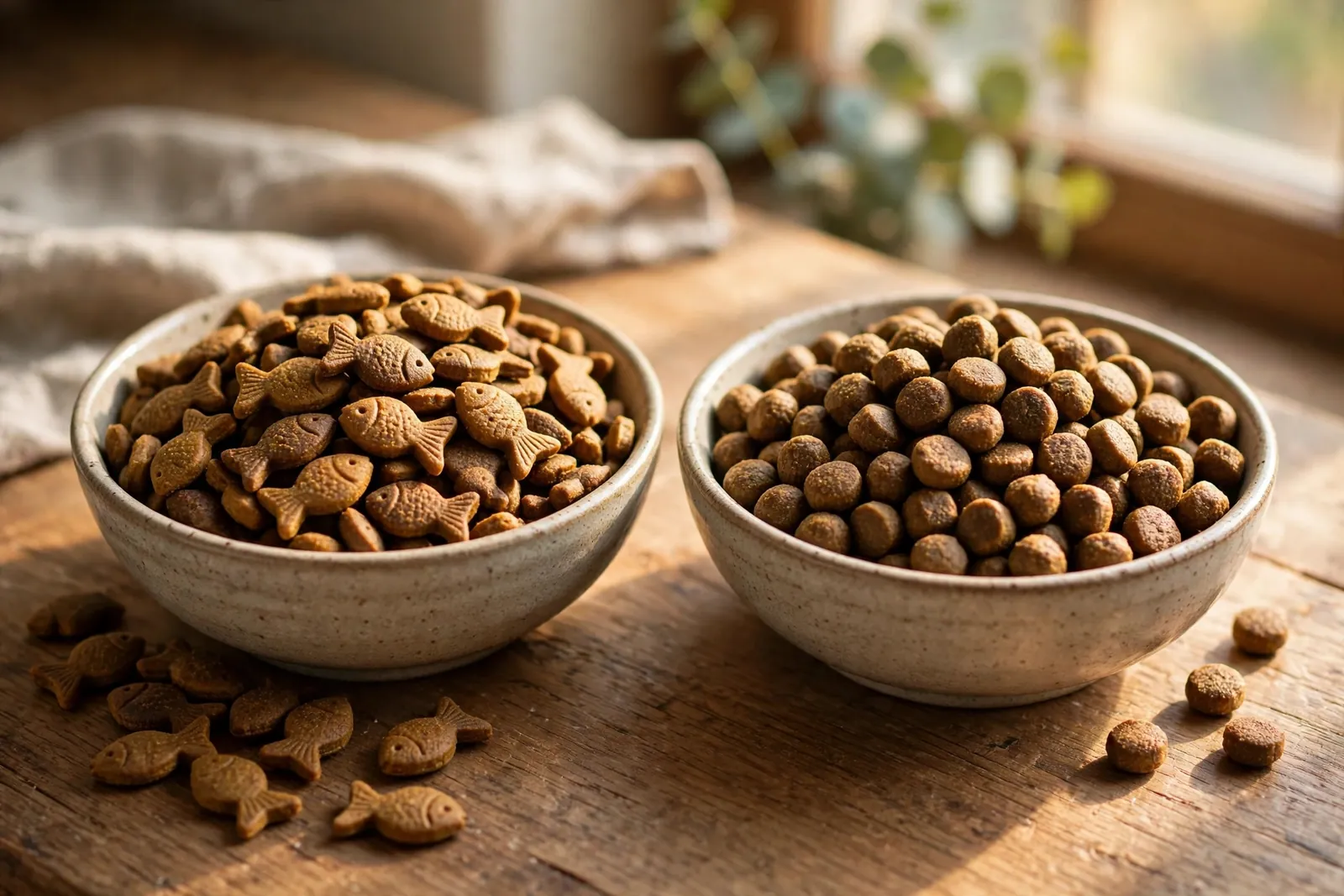
Dry food is the backbone of cat feeding in Pakistan because it fits real life. Measure a portion in the morning, leave it down while you are at work, and your cat grazes at its own pace. It keeps for weeks once opened if you roll the bag shut. Our dry range covers the full life cycle: Me-O Adult Tuna, Me-O Kitten, Me-O Mother and Baby Cat, Me-O Persian Anti Hairball. The crunch also helps the teeth, though it never replaces brushing. The trade off is water: dry food is only about a tenth moisture, so a cat eating kibble alone must drink enough. Keep the water bowl wide, clean and away from the food bowl.
What Wet Food Actually Does for Your Cat
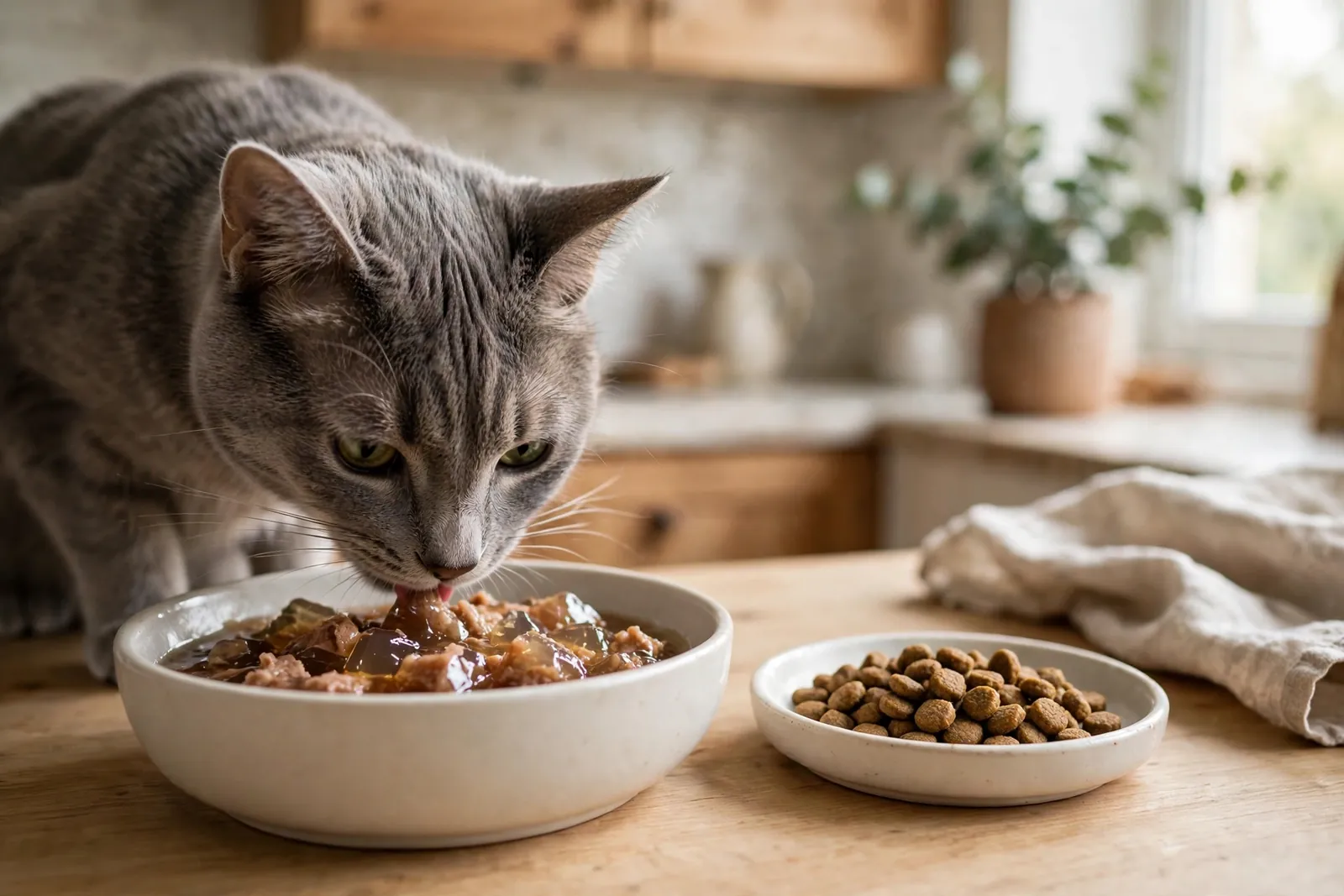
Wet food is mostly water, and that is the point. A pouch is typically three quarters moisture or more, so every spoonful quietly tops up a cat that would never drink that much from a bowl. In our summers, that hidden hydration matters most. Wet food also smells stronger, which is why even fussy cats that walk away from kibble will often eat a pouch with enthusiasm. The imported wet market is built around 85g pouches: beef and poultry, meaty meals in jelly, and 12 pouch variety packs. The downsides are real: an open pouch needs using within a day or two, leftovers should not sit out in the heat, and it costs more per serving than dry food. One pouch looks small, but it is a full meal.
Nutrition Compared Side by Side
A complete dry food and a complete wet food from the same brand are designed to deliver the same essentials: animal protein, the amino acid taurine that cats cannot make themselves, fats for energy and coat condition, and the vitamins and minerals a cat needs. The difference is concentration. Dry food packs more calories into each gram because the water has been removed, so a small bowl of kibble carries a full meal. Wet food spreads the same nutrition through a much larger, wetter portion. What matters is the word complete on the pack, which means the recipe is a full diet rather than a treat or a topper. Match the formula to the cat: kitten recipes for growth, adult recipes for maintenance, and specialist recipes where needed.
Palatability: What Picky Cats Really Do
Cats do not read labels. They judge food by smell, texture and temperature, and they change their minds without notice. Wet food usually wins the first encounter because the smell is stronger and the texture is closer to fresh meat. Dry food wins the second encounter more often than people expect, because the crunch and concentrated flavour grow on cats that like to graze. The cats that cause the most trouble are the ones fed one format exclusively for years: a kibble-only cat may refuse wet food entirely, and a pouch-only cat may treat kibble like gravel. Offer both formats to a kitten from the start. With an adult cat set in its ways, switch gradually over a week or more, mixing a little of the new food into the old.
Value Compared Without the Guesswork
Value is where the two formats separate most clearly, so work out the maths for your own household rather than trusting a shelf price. Dry food stretches further per bag: a bag lasts weeks, the cost per meal is low, and there is almost no waste if you store it properly. Wet food costs more per meal, because a large share of each pouch is water, the packaging is single serve, and an unfinished pouch is food in the bin. Budget for it as a daily supplement while dry food carries the bulk of the calories. The most expensive way to feed a cat is to buy food the cat will not eat, so start with small quantities of a new format and only stock up once your cat has voted with an empty bowl.
Feeding in Pakistani Summers
Summer changes the rules. Heat dulls appetite, water needs rise, and food left out spoils faster. Wet food is at its most useful from May to September, because it delivers water with every bite when cats are least inclined to visit the water bowl. Serve pouches fresh, clear away leftovers within an hour, and keep the bowl in the coolest part of the room. Dry food is the steadier summer format in one way: kibble left down does not spoil the way wet food does, so a cat that eats little and often can graze safely. Change the water beside the kibble bowl at least once a day, more often in a heatwave.
Kittens, Seniors, and Special Cases
Age changes the answer. Kittens need calorie dense food in small, frequent meals, and most do well on a mix of kitten kibble and soft wet food while their teeth develop. Adult cats from one to seven years are the straightforward case: a measured adult dry food plus a daily pouch suits most of them. Seniors slow down and sometimes struggle with hard kibble, so a higher wet share often suits them, with the dry portion softened in a little warm water if chewing becomes hard. Longhaired cats benefit from the anti hairball formula. Cats with urinary troubles, kidney concerns or any diagnosed condition are a different conversation, and the right diet for a sick cat is a vet's call, not a blog's.
A Mixed Routine That Works
Here is the routine most experienced owners in Pakistan settle on. Dry kibble as the base, measured into two meals, morning and evening. One wet pouch in the evening, served fresh at room temperature. Fresh water in a wide bowl, changed daily, kept away from the food. Creamy treats or crunchy Temptations from our cat treats range a few times a week for bonding, not as a meal. That is it. Adjust the ratio to your cat: a cat that barely drinks gets more wet food, a cat gaining weight gets the pouch every second day and a measured kibble portion, and a fussy cat gets the pouch mixed into the kibble for the first week. Browse the cat dry food range to build your mix, or start with the Me-O Adult Tuna.
Storage and Freshness in Our Climate
Cat food goes stale in Pakistani kitchens the same way human food does, just faster. Dry food is the forgiving format: roll the bag tightly after every use, clip it shut, or decant it into an airtight container, and keep it in a cool, dry cupboard away from the stove. An open bag keeps its crunch for four to six weeks stored properly; left open in humid air, it softens within days. Unopened pouches just need a cool cupboard out of the sun, but check the expiry date and seal, and reject any pouch that is puffed, leaking or smells off. Both formats are heavily faked in Pakistan, so buy sealed stock from sellers who welcome verification. Our guide to spotting fake Me-O and Whiskas walks through the six checks.
The Bottom Line
Dry food is the practical staple: affordable, convenient, easy to measure, and good for teeth. Wet food is the hydration and palatability upgrade: it gets water into cats that will not drink and tempts the fussiest eaters. Neither is the whole answer on its own. Feed dry as the base, add one wet pouch a day, keep the water fresh, and let your cat's appetite and body condition settle the ratio. Browse the full shop to put your mix together.
Frequently Asked Questions
Can I feed my cat only dry food?
Yes, provided it is a complete diet and your cat drinks enough water. Watch the water bowl closely, because cats on dry food alone must drink more, and many do not. If your cat barely drinks, adding one wet pouch a day is the simplest fix.
Can I feed my cat only wet food?
Yes, a complete wet food can be a full diet, and some cats, especially seniors, do better on it. It costs more per day than a mixed routine, and you should watch dental health, since nothing gives the teeth a workout.
How do I switch my cat from dry to wet food, or the other way?
Gradually, over seven to ten days. Mix a small amount of the new food into the old and increase the share a little each day. Warm wet food to room temperature before serving, and never force a switch by leaving a cat with food it refuses for more than a day.
Is wet food better for cats in summer?
For hydration, yes. Wet food delivers water with every bite, which matters when heat dulls appetite and raises water needs. Serve it fresh, clear leftovers away within an hour, and keep fresh water in more than one spot.
How much wet and dry food should I feed each day?
Follow the feeding guide printed on the pack, then adjust to your cat's body condition: you should feel the ribs under a light fat cover, not see them. A common starting point is a measured portion of dry food split into two meals plus one 85g pouch a day.