Storing Imported Candy in Karachi Heat
That glossy imported chocolate bar never stood a chance in a Karachi kitchen drawer. Summer temperatures push past 40 degrees, humidity hangs in the air for months, and a bar that tasted perfect abroad turns soft, streaky or sad within days of landing here. The good news: storage is simple once you understand what heat and humidity actually do to chocolate and candy. This guide covers all of it, from bloom to the load-shedding fridge strategy.
In this guide:
- What Karachi's Heat Does to Imported Chocolate
- Finding the Coolest Spot in Your Home
- Should You Keep Chocolate in the Fridge?
- Airtight Containers Are Non-Negotiable
- How to Rescue Melted or Bloomed Chocolate
- How Long Imported Candy Lasts on Your Shelf
What Karachi's Heat Does to Imported Chocolate
Chocolate is mostly cocoa butter holding everything together, and cocoa butter starts softening around 28 degrees. Karachi spends most of the year above that. A bar left on the counter is not being mistreated; it is just physics. First the surface goes soft and takes fingerprints. Leave it longer and bloom moves in.
Two kinds exist. Fat bloom: cocoa butter melts, drifts to the surface and recrystallizes as a greyish white film. Sugar bloom: humidity dissolves surface sugar, the moisture evaporates, and a dusty gritty coating remains. Neither makes chocolate unsafe. Both ruin the snap and the smooth mouthfeel, and they look alarming enough that most people bin the bar.
Gummy candy has its own weakness. Heat turns gummies sticky until they fuse into one lump. Hard candy pulls humidity from the air, goes tacky, and the wrappers glue themselves on. None of this means the import was defective. It is climate doing what climate does.
Finding the Coolest Spot in Your Home
Rule out the obvious danger zones first. The kitchen counter near the stove, any room that catches afternoon sun, and the corner where the UPS batteries hum all day. The coolest spots in a typical Karachi home: a bedroom cupboard that stays shut, the lowest shelf of a pantry, a ground-floor storeroom that never sees direct sun.
Try a quick test. Walk into a room at 3pm and hold your hand at cupboard height. If the air feels warm on your skin, your chocolate feels it too. Aim for storage under 20 degrees where you can get it. In May and June that temperature barely exists indoors without air conditioning, which is exactly why the fridge question comes next.
Light deserves a mention too. Sunlight through a window can heat a cupboard's contents well past room temperature. Keep sweets in the dark. A closed cupboard beats an open shelf every single time.
Should You Keep Chocolate in the Fridge?
For most of the Karachi year, yes. The fridge's downsides are real but fixable: chilled chocolate tastes muted straight from the cold, and an unsealed bar absorbs onion and leftover-curry smells within days. Both vanish with one habit. Seal it properly, and let it warm up before eating.
Seal means a real airtight container or a zip bag with the air pressed out, not the original foil loosely folded back. When you want a piece, take the bar out ten to fifteen minutes early and leave it on the counter. The flavour wakes right back up. That is the whole trick.
Placement counts. The fridge door swings through the widest temperature range, so tuck chocolate toward the back of a middle shelf instead. And during load-shedding, stop opening the fridge to check on things. Every opening dumps cold air, and a fridge opened hourly in a Karachi summer struggles to stay cold.
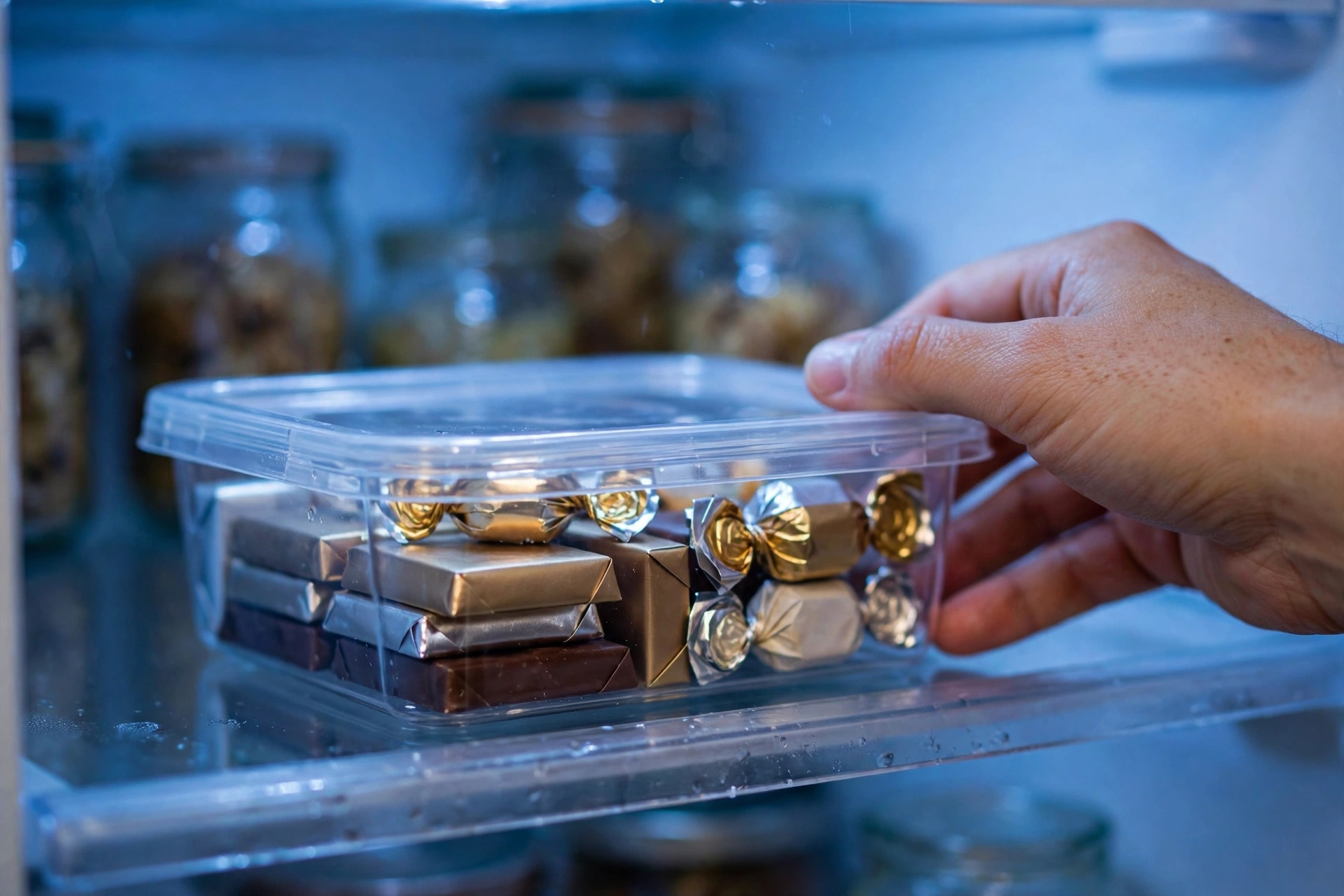
Airtight Containers Are Non-Negotiable
Humidity is the quieter killer. Monsoon air in Karachi sits at 70 to 80 percent humidity, and chocolate and candy pull moisture straight out of it. The result: sugar bloom on chocolate, sticky gummies, tacky hard candy. An airtight container breaks the cycle completely.
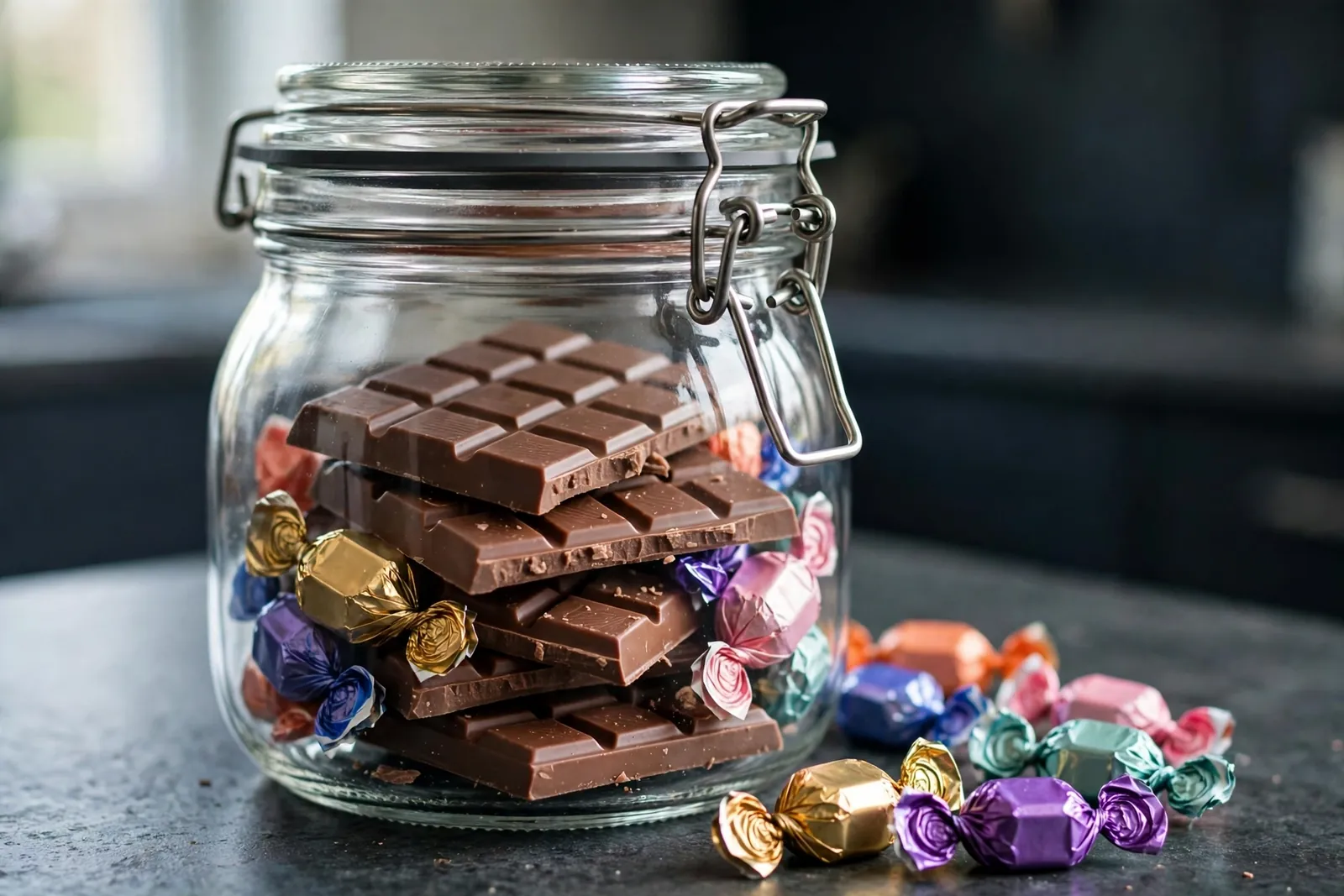
Glass jars with clamp lids, plastic containers with silicone seals, zip-lock bags with the air squeezed out. All of them work. What fails: opened packaging folded over, a decorative tin with a loose lid, anything you have to guess about. If you can smell the candy through the container, the seal has failed.
Give sweets their own container, away from masala packets and coffee, or your chocolate will start tasting like your spice rack. And favour small containers over one giant jar. A big jar opened daily breathes in a lungful of humid air every time; small ones you finish faster stay fresher.
How to Rescue Melted or Bloomed Chocolate
Do not throw it out. Bloomed chocolate is perfectly safe; the fat and sugar simply rearranged themselves. A bar that melted and reset into a wobbly slab is ugly, not dangerous. Both are rescue material.
The simplest rescue is melting it properly. Break the chocolate into a bowl, melt it gently over simmering water, and pour it into desserts, hot chocolate or chocolate-dipped biscuits. Bloom vanishes the moment the chocolate melts and sets again. Nobody at the table will know.
Option two: chop it into chunks for baking. Melted-and-reset chocolate behaves a little differently in texture but bakes identically. Banana bread, brownies, cookies: all forgiving. The one casualty you cannot reverse is gummies fused into a single mass, and even those can be pulled apart and tossed in a little sugar to stop the sticking. Waste nothing.
How Long Imported Candy Lasts on Your Shelf
Imported sweets carry printed expiry dates, and those dates assume sane storage: cool, dry, sealed. Stored properly, chocolate comfortably reaches its printed date and often a few months past it. Stored badly in Karachi heat, the texture fails long before the date does. Trust the date, but protect it with storage.
Hard candy is the marathon runner: sealed and dry, it keeps for a year or more. Gummies and jellies sit in the middle: six to twelve months, with heat shortening that by turning them sticky well before any safety concern. Once opened, everything accelerates, so aim to finish opened packs within a few weeks. Rarely a hardship.
Buy in amounts you will actually eat. A giant chocolate haul sitting through three months of summer fares worse than two smaller orders spaced out. Our imported jellies and candy range ships sealed with cash on delivery, so reordering is easy; pick up the Haribo Goldbears or browse the full shop for the rest.
Stock Up Smart, Store It Right
Karachi's heat is not going anywhere, but neither is your chocolate's flavour if you store it right. Airtight, dark, cool, and into the fridge when summer demands it. Rescue what melts, finish what you open, and order in sensible amounts. Browse our imported jellies and candy range to stock up, or message us on WhatsApp at 0337 3698048 and we will help you pick sweets that survive the season.
Frequently Asked Questions
Can you eat chocolate with white spots on it?
Yes. Those white spots are bloom, either cocoa butter or sugar rising to the surface after heat or humidity exposure. The chocolate is safe to eat, though the texture turns grainy and the snap disappears. Melt bloomed chocolate into hot chocolate or desserts and the bloom vanishes completely.
Should chocolate go in the fridge in Pakistan?
For most of the year, yes. Room temperature in Karachi sits well above chocolate's comfort zone, especially from April to October. Seal the chocolate in an airtight container first so it never picks up moisture or food smells, and let it sit at room temperature for ten minutes before eating for full flavour.
How do you store gummy candy in humid weather?
Keep gummies in a small airtight container in a cool, dark cupboard, or in the fridge during peak summer. Humidity makes them sticky and fused, so the seal matters more than the temperature. Once opened, finish the pack within a few weeks for the best texture.
Does melted chocolate go bad?
Melting alone does not spoil chocolate. A bar that melted in the heat and re-solidified is safe, just misshapen with a softer texture. The exceptions are chocolate that smells off, tastes sour, or sat open collecting moisture for weeks; when in doubt, melt suspect bars into cooked desserts rather than eating them plain.
Where is the best place to store candy in a Karachi home?
The coolest, darkest, most consistently shut spot you have: a bedroom cupboard, a low pantry shelf, or a ground-floor storeroom away from sunlight. From April to October, the back of a middle fridge shelf in a sealed container beats every cupboard in the house.